
Gond Resistance Movement
- Home
- Movement
Struggle Against Colonial Expansion
During the mid-19th century, British colonial expansion deeply affected the forested regions of central India, including the Gond territories of Vidarbha. Traditional systems of self-governance, land ownership, and forest rights were disrupted by new administrative controls, heavy taxation, and resource exploitation. Tribal communities, who had long lived in harmony with nature and maintained autonomous leadership structures, suddenly faced economic hardship and cultural interference. These policies not only threatened their livelihoods but also undermined their identity and ancestral rights.
Revolt Against British Rule
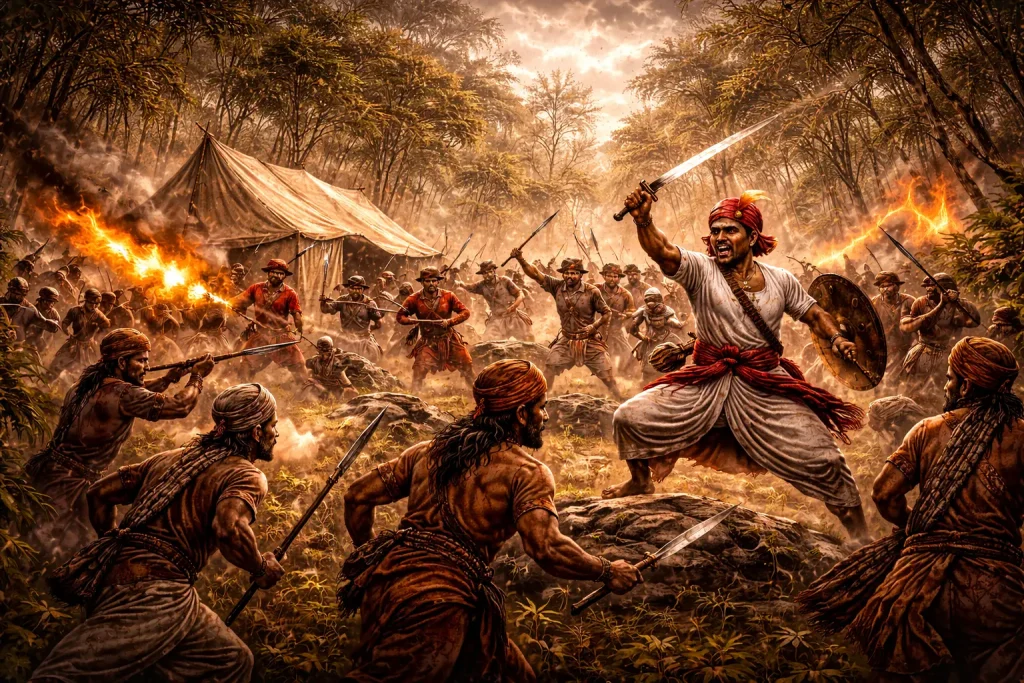
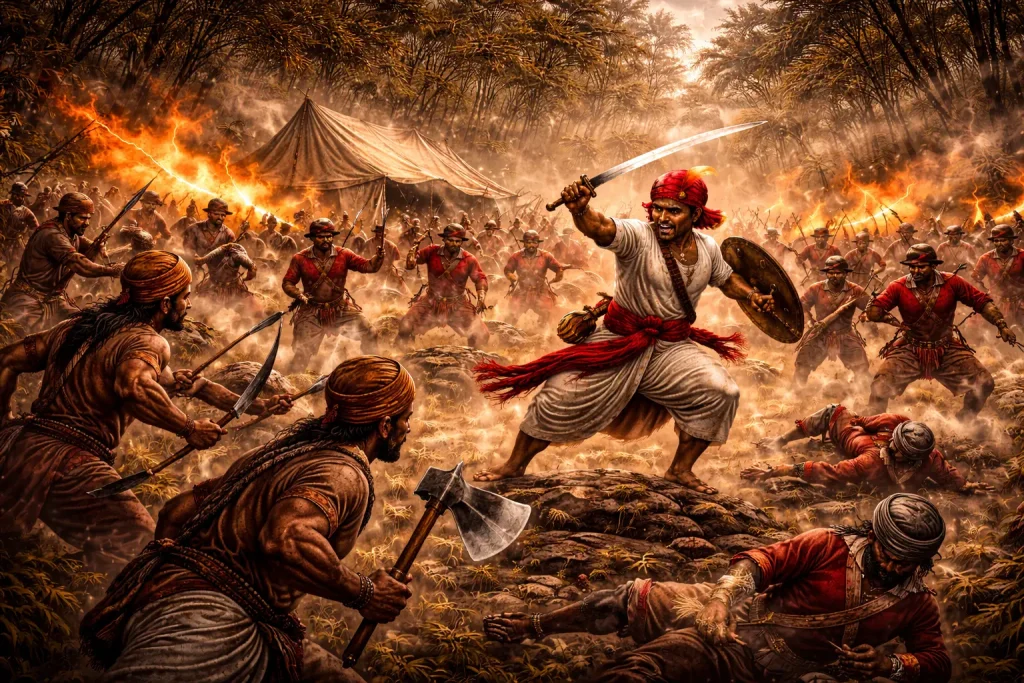
Baburao Shedmake’s revolt against British rule emerged during the turbulent period of the 1857 uprising, when resistance against colonial authority spread across India. In the forested regions of Vidarbha, British policies had disrupted tribal land rights, imposed heavy taxation, and interfered with traditional governance systems. These actions created deep resentment among Gond communities, who had long maintained autonomy over their territories. Refusing to accept foreign domination, Baburao organized local tribal warriors and prepared them to challenge colonial control.
Guerrilla Warfare & Mobilization
Baburao Shedmake adopted guerrilla warfare tactics to counter the superior strength and resources of British forces. Understanding that direct confrontation would place his tribal warriors at a disadvantage, he relied on speed, surprise, and deep knowledge of forest terrain. The dense landscapes of Vidarbha became a natural shield, allowing his fighters to strike swiftly and retreat safely. These strategic movements disrupted colonial operations and demonstrated the power of indigenous tactical intelligence.
Mobilization under his leadership was rooted in unity and shared purpose. Baburao encouraged scattered Gond communities to organize into disciplined resistance groups, fostering coordination and trust.

Major Battles & Actions
Baburao Shedmake led several bold actions against British forces in the Vidarbha region during the 1857 uprising. Rather than engaging in large conventional warfare, he organized swift and targeted attacks on colonial outposts, supply routes, and administrative centers. These actions disrupted British control and demonstrated that tribal resistance was both organized and determined. His strategic strikes created fear among colonial authorities and inspired surrounding communities to rise in defiance.
Attack on British
Year: 1857
Baburao Shedmake emerged as a courageous tribal leader who actively resisted British colonial authority during the 1857 uprising period in the Vidarbha region.
Disruption of Supply
Year: 1857
His forces strategically targeted British supply lines and communication routes, weakening their logistical strength and slowing military movements in forest territories.
Guerrilla Strikes
Year: 1857–1858
Using dense forest cover, Baburao organized swift hit-and-run operations that confused and destabilized British troops unfamiliar with the terrain.
Tribal Warriors
Year: 1857
He united scattered Gond villages into disciplined resistance groups, transforming local unrest into a coordinated regional uprising.
Defensive Stronghold
Year: 1858
Baburao established temporary forest strongholds to protect villagers and fighters, creating safe zones during intensified British counterattacks.