
About Baburao Shedmake
- Home
- About
Early Life & Background
Baburao Shedmake was born in the mid-19th century in the forested region of present-day Vidarbha, into a Gond tribal community deeply connected to nature, land, and ancestral traditions. Growing up amidst dense forests and rural settlements, he learned the values of courage, self-reliance, and collective responsibility from an early age. His childhood was shaped by stories of tribal valor, cultural rituals, and the hardships faced under expanding British authority. These early experiences instilled in him a strong sense of identity and belonging, forming the foundation of his future leadership and unwavering commitment to protecting his people and homeland.
As he grew older, Baburao witnessed increasing exploitation of tribal lands, heavy taxation, and interference in traditional governance systems by colonial forces. The economic and social pressures placed upon his community deeply affected him, transforming youthful awareness into determined resistance. Known for his sharp mind and fearless nature, he gradually emerged as a respected voice among his people. His understanding of local terrain, combined with strong moral conviction, prepared him to challenge injustice. The hardships of his formative years did not weaken him; instead, they forged a resilient spirit that would soon lead a courageous tribal uprising.
Family & Gond Tribal Heritage
Baburao Shedmake was born into a proud Gond tribal family whose life revolved around land, forest traditions, and strong community values. His upbringing reflected the cultural richness, warrior spirit, and deep-rooted identity of the Gond people, which later shaped his courage and leadership in the fight against colonial rule.

Gond Warrior Lineage
Baburao belonged to the Gond community, known for its history of bravery, self-rule, and resistance. Tribal elders passed down stories of valor and independence, nurturing a fearless mindset within him from childhood.
01

Cultural Traditions & Values
Raised in an environment guided by customs, rituals, and collective living, he learned respect for elders, unity in adversity, and deep reverence for nature—principles that later defined his leadership.
02

Leadership Roots
The Gond social structure emphasized cooperation and shared responsibility. Growing up within this system, Baburao developed strong bonds with his people, earning trust and respect that later helped him mobilize resistance.
03
Family & Gond Tribal Heritage
Baburao Shedmake’s transformation from a young member of the Gond community into a respected tribal leader was shaped by the turbulent atmosphere of mid-19th century India. The expansion of British authority into forested and tribal regions disrupted traditional systems of governance, land rights, and social balance. Heavy taxation, forced control over forest resources, and interference in indigenous customs created unrest among tribal communities. Witnessing these injustices firsthand, Baburao developed a deep sense of responsibility toward his people. What began as quiet observation soon evolved into a determined resolve to defend his land, culture, and community from external domination.
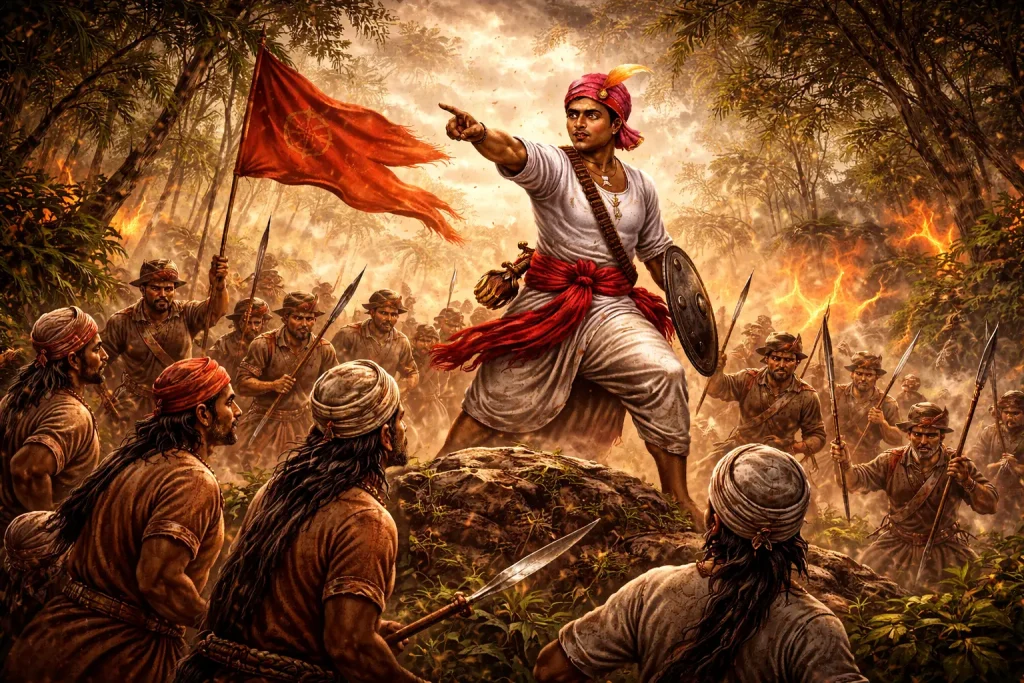
Personality & Leadership Traits
Baburao Shedmake was not only a warrior of action but also a leader of character. His personality reflected bravery, discipline, and deep responsibility toward his people. Even at a young age, he demonstrated calm decision-making under pressure and an unwavering commitment to justice. His leadership was built on trust, unity, and moral strength rather than authority alone. Through his words and actions, he inspired confidence among tribal communities, transforming fear into courage and uncertainty into organized resistance.
Fearless Courage
Baburao faced colonial power without hesitation. His bravery on the battlefield and his willingness to stand against injustice made him a symbol of strength and determination.
Strategic Thinking
He understood the terrain, planned movements carefully, and used guerrilla-style tactics effectively. His intelligence allowed smaller tribal groups to challenge stronger colonial forces.
Unity Builder
Baburao emphasized solidarity among scattered tribal communities. He encouraged cooperation, collective responsibility, and loyalty to a shared cause.
Moral Integrity
His resistance was guided by principles, not revenge. He fought to protect dignity, land, and cultural identity, earning lasting respect from his people.